| |
The Ballad of Hasanaginica
The ballad of Hasanaginica or
Asanaginica, as recorded in its original writing, is
arguably the most beautiful and the most translated Croatian
ballad. Indisputably, the ballad is also very much part of the
Bosnian or Bosniak's literary heritage. We will not try to answer
the ownership of ballad on these pages, since it transcends national
boundaries, but provide it's few versions and several historic facts
associated with it.
Asanaginica was first
published by Italian humanist Alberto Fortis
in his book "Viaggio in Dalmazia”, 1774. The ballad was
translated into German (by great Goethe) the following year, and very
soon in French, and
English.
The earliest translations are, according to Alija Isaković's treatise
"Hasanaginica":
1774.
in Italian, Alberto Fortis,
1775. in German, Clemens Werthes, anonymously,
1775. in German, Johann Wolfgang Goethe,
published anonymously in 1778 and in 1779 with signature,
1778. in French, anonymous,
1789. in Hungarian, Ferenc Kazinczy, published
in 1813,
1798. in Latin, Duro Feric,
1798. or 1799, in English, Walter Scott. The
translation was not published until 1924!
1800. in English, John Boyd Greenshields,
1813. in French, Charles Nodier
1813. in Czech, Samuel Roznay, published in
1818,
1814. in Serbo-Croatian, Vuk Stef. Karadzic,
and again in 1846
1819. in Polish, Kazimierz Brodzinski,
1826. in German, Talvj,
1827. in Russian, A. H. Vostokov,
1827. in English, John Bowring,
1827. in French, Prosper Merimee,
1830. in Swedish, Johan Ludvig Runeberg,
1830. in French, Gerard de Nerval,
1832. in Slovenian, Jakob Zupan,
1832. in French, Claude Fauriel,
1835. in Russian, Alexandar Sergejevic
Pushkin, published1855,
1841. in French, Adam Mickiewicz,
Hasanaginica has also been
translated into Spanish. Ukrainian, Esperanto, Rumanian, New Hebrew,
Dutch, Albanian, Malaysian, Chinese, Japanese, and few other
languages.
|
THE LAMENTATION OF
THE FAITHFUL WIFE OF ASAN AGA
by
Sir Walter Scott ****
|
I.
What yonder glimmers so white on
the mountain
Glimmers so white where yon
sycamores grow?
Is it wild swans around Vaga's
fair fountain?
Or is it a wreath of the wintry
snow?
II.
Had it been snow glimmers wihite on the mountain,
By this it had melted 'before the bright day,
Or had it been swans around Vaga's fair fountain
They had stretched their broad pinions and sped 'them away
III.
It is not swans around the fountain of Vaga,
It is not a wreiath of the wintiry snow,
But it is the gay tents of the fierce Asan Aga
Glimmering so white where yon sycamores grow.
IV.
Low lies the Chief on the couch of the wounlded,
There watch his sisters with tenderest care.
There weeps his mother in sorrow unbounded
Every sad friend — tout his Lady — is there.
V.
She sorrowed more than the fondest of mothers,
But from the thronged camp in which wounded'he lay
Tho there flocked s'ad friends, tender sisters and brothers
Timid shamefacedness compelled her to stay.
VI.
But at her absense high kindling his anger
Wrote the stern chieftain this severing line
— »Away from my Castle, its mistress no longer,
Away from my children and all that is mine.« —'
VII.
Anguish the heart of that Lady deep rended
When the hard message was brought to her eye
Woe were the looks on her children she bended
Weeping around her tho' scarce knowing why.
IX.
O'er the high drawbridge come horses loud prancing
Wildly she started in desperate mood
She thought 'twas the signal of Asan advancing
And rushed to the turret to plunge in the flood.
X.
»Stay thee, oh, stay thee! my Mother! my Mother!
'Tis not the steeds of our father you hear
'Tis the fleet horse of Carazan thy 'brother« —
— Thus cried her children in sorrow and fear —
XI.
Then the sad mourner turned back to her 'brother
Clinging around him with bitterest 'moan.
— »Late of these five little darlings, the mother
Now isee me, Carazan, the mother of none.«
XII.
Silent and sad stood her brother Carazan
Then drew from his bosom the severing Bill
Speaking divorce to the Lady of Asan
Leaving her free to espouse whom she will.
XIII.
Then the sad Dame to her gLrls gave her blessing
Kissed the red cheek of each fair featured 'boy
But from the suoklling to her breast closely pressing
Woe's me! she could not unloosen the tie.
XIV.
Torn was the tie by the harsh-tempered brother
He raised her behind him upon his fleet horse
And to the lofty abode of their 'mother,
He bent with the sorrowful Lady his course.
XV.
Scairce had a fortnight that widow past over
Only a fortnight, a fortnight and day
When to that Lady came many a lover
All in her mourning as weeping she lay.
XVI.
The greatest of ail was Imoski's proud Cadi
Long had he loved her more dearly than life
Then to her brother spoke weeping that lady
— »Give me no more to another to wife.
XVII.
— »Give me no more as a wife to another«
Thus to her brother in sorrow she 'spoke
»Lest when my poor orphans shall call on their mother
By anguish and 'longing my heart should be broke.«
XVIII.
Her brother cared not for the prayer of the lady
Eirmly resolved to bestow her as spouse
To bestow her as spouse on Imotski's great Cadi
That the high marriage-gifts should enrich his proud house.
XIX.
»Yet bid the Cada, my brother Carazan
Bring a black veil this sad head 'to enfold
Lest when I pass by the dwelling of Asan
These widowed eyes ishould their orphans beholds
XX.
Scarce was the message received by the Cadi
Soon he asseflmlbled the gay bridal train
And bringing the veil as desired by the lady
Safely the towers of Carazan they gain.
XXI.
Safely they gained the 'high towers of Carazan
But with the Bride 'as returned the gay train
Lo! as they passed the proud dwellttnig of Asan
The 'children beheld their [lost mother again.
XXII.
Loudly they shouted: »0h, art thou returned
Comest thou our meals our pastimes 'to share
0 for thy absence how long have we mourned
Pass om no further — thy children are here.«
XXIII.
At the fond voices a sudden pause -made she
»Rein in your steeds these loved turrets below
Thus to the gallants in agony said she
»Till my last gifts on my babes I bestow.«
XXIV.
Beneath the proud
turrets the bridal train rested
While her last gifts
on her Babe she bestowed
While she the Iboys
with rich girdles invested
And with gay sabres
with jewels that glowed.
XXV.
Decked she her
daughters in silks richly rustling
And for those days
when his strength might them wield
To the dear suckling
in her bosom close nestling
Gave 'she a girdle, a
sabre and shield.
XXVI.
All this from beside saw the
istern Asan Aga
And lloud to his children he
haughtily cried
Away from that woman more
false than the Vaga
More light than the ibreeze
and more cold than its tide.
XXVII.
Away fled the children for
fear loudly crying
All but the suckling she
clasped to her breast
Down sunk 'the Lady pale,
shivering and dying
Grasped it yet closer and
sunk into rest.
|
History by Ante Ujevich to be
written here.
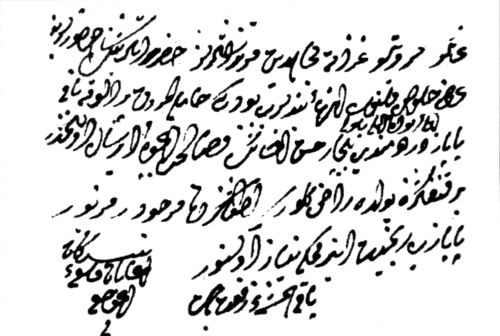
|
 |
Asan-aga wounding
|
Imotski cadi former quarters
|
In the following table we give
three
versions that could be used for comparative exploration. On the
left
is a version of the so called "Splitski manuscript" origin. It
was in
property of Srećko Dujam Karaman. The original text of Fortis, as
slightly modified and recorded
in "Diversi Pezzi del Viaggio in Dalmazia," by Giovanni Lovrich (Ivan
Lovrić, born in Sinj, Croatia 1754), Venezia,
1776 is in the middle column. The contemporary version of
Hasanaginica, most probably supplied by Prof Ivan Juroš, borrowed from
www.imotski.hr site is given in the right
column.
The "Split" version in its "ikavica and štokavica"
dialect matches well the geography where the ballad has originated,
i.e. east of village Zagvozd near Imotski. "Ikavica and
štokavica" was spoken by both Croats and Muslems around Imotski at that
time. Fortis' or Lovrić's version uses "ijekavica" dialect with
few "čakavica" words, an interesting mix suggesting a Dalmatian person
from coast has helped Foris record the ballad, if not himself making
the adjustments. One possible source of Hasanaginica to Fortis
was Julije Bajamonti, an engineer from Split who was collecting folk
songs and who was interested in exploring Dalmatian inside
regions. Fortis' version was fully translated to "ijekavica and štokavica"
by Vuk Karadžić in 1814, who has also replaced many original ballad
words. His name, "Hasanaginica" stuck.
ASANAGINICA
by Srećko Dujam Karaman **
|
by
Ivan
Lovrić |
contemporary
|
Sto se bili u gori
zelenoj?
al su snizi, al su labutovi?
da su snizi, veæ bi okopnili,
labutovi veè bi poletzli:
5 ni su snizi, nit su labutovi,
nego èator age Asan age.
On boluje u ranami Ijutim;
oblazi ga majka i sestrica,
a Ijubovca od stida ne mogla.
Kad li mu je ranam bolje bilo,
ter poruèa virnoj Ijubi svojoj:
,Ne èekaj me u dvoru bilomu,
,ni u dvoru, ni u rodu momu.'
Kad kaduna rici razumila,
15 jos je jadna u toj misli stala,
jeka stade konja oko dvora,
i pobize Asanaginica,
da vrat lomi kule niz penzere;
za njom trèu dvi æere divojke:
20 ,Vrati nam se, mila majko naša,
,ni je ovo babo Asan ago,
,veæ daiza Pintoroviè beze'
1 vrati se Asanaginica,
ter se viša bratu oko vrata:
25 ,Da moj brato, velike sramote,
,di me šalje od petero dice.'
Beze muèi, ne govori ništa:
veè se masa u žepe svione,
i vadi joj knjigu oprošæenja,
30 da uzimlje podpuno vinèanje,
da gre s njime majci uza trage.
Kad kaduna knjigu prouèila,
dva je sinka u èelo Ijubila,
a dvi èere srid rumena Uca;
35 a s malakniin u bešici sinkom
odilit se nikako ne mogla,
veè je bratac za ruke uzeo,
i jedva je s sinkom rastavio,
ter je meèe k sebi na konjica,
40 s njome grede k dvoru bijelomu.
U rodu je malo vrime stala,
malo vrime, ni nedilju dana,
dobra kado i od roda dobra,
dobru kadu prosu sa svi strana,
45 ja najveèe imoski kadija.
Kaduna se bratu svomu moli:
,Aj tako te ne želila, braco,
,ne moj mene davcit za nikoga,
,da ne puca jadno srce moje,
50 ,gledajuèi sirotice svoje."
Ali beze ne ajaše ništa,
veè je daje imoskom kadiji.
Još kaduna bratu se moljase,
da njoj piše listak bile knjige,
55 da je šalje imoskom kadiji:
,Divojka te Upo pozdravljase,
,a u knjizi Upo se moljaše,
,kad pokupis gospodu svatove,
,dug podkluvak nosi na divojku;
60 ,kada bude agi mimo dvore,
,nek ne vidi sirotice svoje/
Kad kadiji bila knjiga dodje,
gospodu je svate pokupio,
svate kupi, grede po divojku,
65 dug podkluvak nosi na. divojku.
Dobro svati došli do divojke,
i zdravo se povratili s njome;
a kad hili agi mimo dvore,
dvi je èere s penzere gledaju,
70 a dva sina prid nju izodjaju,
tere svojoj majci govoraju:
,Vrati nam se, mila majko naša,
,da mi tehi užinati damo/
Kad to èula Asanaginica,
75 starisini svatov govorila:
,Bogom brate! svatov starisina!
,ustavi mi konje uza dvore,
,da darujem sirotice moje'
Ustaviše konje uza dvore,
80 svoju dièu lipo darovald,
svakom sinku nozve pozlaèenè,
svakoj èeri èohu do poljane,
a malenu u bešici sinku
njemu salje ubošku aljinu.
85 A to gleda junak Asan ago,
ter doživlje do dva sinka svoja:
,0te amo, sirotice moje!
,kad se neæe smilovati na vas
,majka vasa srca ardjaskoga.'
90 Kad to èula Asanaginica,
bilim licem zemlji udarila,
u put se je dušom rastavila
od ždlosti gledajuæ sirota.
|
Scto se bjeli u
gorje zelenoj?
Al-su snjezi, al-su Labutove?
Da-su snjezi vech-bi okopnuli;
Labutove vech-bi poletjeli.
Ni-su snjezi, nit-su Labutove;
Nego sciator Aghie Asan-Aghe.
On bolu-je u ranami gliutimi.
Oblaziga mater, i sestriza;
A Gliubovza od stida ne mogla.
Kad li-mu-je. ranam' boglie bilo,
Ter poruça vjernoi Gliubi svojoj:
Ne çekai-me u dvoru bjelomu,
Ni u dvoru, ni u rodu momu.
Kad Kaduna rjeçi razumjela,
Josc-je jadna u toj misli stala.
Jeka stade kogna oko dvora:
I pobjexe Asan-Aghiniza
Da vrat lomi kule niz penxere.
Za gnom terçu dve chire djevoike:
Vrati-nam-se, mila majko nascia;
Ni-je ovo babo Asan-Ago,
Vech daixa Pintorovich Bexe
I vratise Asan Aghiniza,
Ter se vjescia bratu oko vrata.
Da! moj brate, velike sramote!
Gdi-me saglie od petero dize!
Bexe muci; ne govori nista.
Vech-se mascia u xepe svione,
I vadi-gnoj kgnigu oproschienja,
Da uzimglie podpunno viençanje,
Da gre s' gnime majci u zatraghe.
Kad Kaduna Kgnigu prouçila,
Dva-je sina u celo gliubila,
A due chiere u rumena liza:
A s' malahnim u beliscje sinkom
Odjeliti nikako ne mogla.
Vech-je brataz za ruke uzeo,
I jedva-je sinkom raztavio:
Ter-je mechie K'sebi na Kogniza,
S' gnome grede u dvoru bjelomu.
U rodu-je malo vrjeme stala,
Male vrjeme, ne nedjegliu dana,
Dobra Kado, i od roda dobra,
Dobru Kadu prose sa svi strana;
Da majvechie Imoski Kadia.
Kaduna-se bratu svomu moli:
Aj, take te ne xelila, bratzo!
Ne moi mene davat za nikoga,
Da ne puza jadno serze moje
Gledajuchi sirotize svoje.
Ali Bexe ne hajasce nista,
Vech-gnu daje Imoskomu Kadii.
Josc Kaduna bratu-se mogliasce,
Da gnoj pisce listak bjele Knighe,
Da-je saglie Imoskomu Kadii.
Djevoika te Ijepo pozdravgliasce,
A u Kgnizi ljepo te mogliasce,
Kad pokupisc Gospodu Svatove
Dugh podkliuvaz nosi na djevojku;
Kada bude Aghi mimo dvora,
Neg-ne vidi sirotize svoje.«
Kad Kadii bjela Kgnjiga doge
Gospodu je Svate pokupio.
Svate kuppi grede po djevotku.
Dobro Svati dosli do djevoike,'
I zdravo-se povratili s' gnome.
A kad bili Aghi mimo dvora,
Dve-je chierze s' penxere gledaju,
A dva sina prid-gnu izhogiaju,
Tere svojoi majci govoriaju.
Vrati-nam-se, mila majko nascia,
Da mi tebe uxinati damo.
Kad to cula Asan-Aghiniza,
Stariscini Svatov govorila:
Bogom, brate Svatov Stariscina,
Ustavimi Kogne uza dvora,
Da darujem sirotize moje.
Ustavise Kogne uza dvora.
Svoju dizu ljepo darovala.
Svakom' sinku nozve pozlachene,
Svakoj chieri cohu da pogliane;
A malomu u bescije sinku
Gnjemu saglie uboske hagline.
A to gleda Junak Asan-Ago;
Ter dozivglie do dva sina svoja:
Hodte amo, sirotize moje,
Kad-se nechie milovati na vas
Majko vascia, serza argiaskoga.
Kad to cula Asan Aghiniza,
Bjelim licem u zemgliu udarila;
U put-se-Je s' duscjom raztavila
Od xalosti gledajuch sirota.
|
Što se bjeli u gori
zelenoj?
Al' su snjezi, al' su labudovi?
Da su snjezi, već bi okopnuli,
labudovi, već bi poletjeli;
nit' su snjezi, nit' su labudovi,
nego šator age Hasan-age:
on boluje u ranami ljutim.
Oblazi ga mater i sestrica,
a ljubovca od stida ne mogla.
Kad li mu je ranam' bolje bilo,
ter poruča vjernoj ljubi svojoj:
"Ne čekaj me u dvoru b'jelomu,
ni u dvoru, ni u rodu momu!"
Kad kaduna r'ječ razumjela,
još je jadna u toj misli stala,
jeka stade konja oko dvora,
i pobješe Hasanaginica,
da vrat lomi kuli niz pendžere.
Za njom trču dvi ćeri djevojke:
"Vrati nam se, mila majko naša,
nije ovo babo Hasan-aga,
već daidža, Pintorović beže!"
I vrati se Hasanaginica,
ter se vješa bratu oko vrata.
"Da, moj brate, velike sramote,
gdi me šalje od petero dice!"
Beže muči, ne govori ništa,
već se maša u džepe svione,
i vadi njoj knjigu oprošćenja,
da uzimlje potpuno vjenčanje,
da gre s njime majci uzatrage.
Kad kaduna knjigu proučila,
dva je sina u čelo ljubila,
a dv'je ćeri u rumena lica:
a s malahnim u bešici sinkom,
od'jeliti nikako se ne mogla,
već je bratac za ruke uzeo,
i jedva je sinkom rastavio,
ter je meće k sebi na konjica,
s njome grede dvoru bijelomu.
U rodu je malo vr'jeme stala,
malo vr'jeme, ni nedjelju dana,
dobra kada i od roda dobra,
dobru kadu prose sa svih strana,
da najveće imotski kadija.
Kaduna se bratu svomu moli:
"Ah, tako te ne želila, braco!
Nemoj mene davat za nikoga,
da ne puca jadno srce moje,
gledajući sirotice svoje!"
Ali beže ne hajaše ništa,
već nju daje imotskom kadiji.
Još kaduna bratu se moljaše,
da njoj piše listak, b'jele knjige,
da je šalje imotskom kadiji:
"Djevojka te l'jepo pozdravljaše,
a u knjizi l'jepo te moljaše,
kad pokupiš gospodu svatove,
dug polduvak nosi na djevojku,
kada bude agi mimo dvor,
nek' ne vidi sirotice svoje!"
Kad kadiji b'jela knjiga dođe,
gospodu je svate pokupio,
svate kupi, grede po djevojku.
Dobro svati došli po djevojke,
i zdravo se povratili s njome.
A kad bili agi mimo dvora,
dvi je ćerce s pendžera gledahu,
a dva sina prid nju izhođahu:
tere svojoj majci govorahu:
"Svrati nam se, mila majko naša,
da mi tebi užinati damo!"
Kad to čula Hasanaginica,
starišini svatov' govorila:
"Bogom brate, svatov' starišina,
ustavi mi konje uza dvora,
da darujem sirotice moje!"
Ustaviše konje uza dvora.
Svoju dicu l'jepo darovala:
svakom sinku nazve pozlaćene,
svakoj ćeri čohu do poljane;
a malomu u bešici sinku,
njemu šalje u bošči haljine.
A to gleda junak Hasan-aga,
ter dozivlje do dva sina svoja:
"Hod'te amo, sirotice moje,
kad se neće smilovati na vas,
majka vaša srca arđaskoga!"
Kad to čula Hasanaginica,
bjelim licem u zemlju udrila,
uput se je s dušom rastavila,
od žalosti, gledajuć' sirota! |
Here are three more very old versions in original transcriptions that
are also of great interest to the lovers of the balled.
|
XALOSTNA PJESANZA
PLEMENITE ASAN-AGHINICE
by
Alberto Fortis
|
KLAGGESANG VON DER
EDLEN FRAUEN DES ASAN-AGA MORELAKISCH.
by
J. W. GOETHE ****
|
Scto se bjeli u
gorje zelenoj?
Al-su snjezi, al-su Labutove?
Da-su snjezi vech-bi okopnuli;
Labutove vech-bi poletjeli. (a)
Ni-su snjezi, nit-su Labutove;
Nego sciator Aghie Asan-Aghe.
On bolu-je u ranami gliutimi.
Oblaziga mater, i sestriza;
A Gliubovza od stida ne mogla.
Kad li-mu-je. ranam' boglie bilo,
Ter poruça vjernoi Gliubi svojoj:
Ne çekai-me u dvoru bjelomu,
Ni u dvoru, ni u rodu momu.
Kad Kaduna rjeci razumjela,
Josc-je jadna u toj misli stala.
Jeka stade kogna oko dvora:
I pobjexe Asan-Aghiniza
Da vrat lomi kule niz penxere.
Za gnom terçu dve chiere djevoike:
Vrati-nam-se, mila majko nascia;
Ni-je ovo babo Asan-Ago,
Vech daixa Pintorovich Bexe.
I vratise Asan Aghiniza,
Ter se vjescia bratu oko vrata.
Da! moj brate, velike sramote!
Gdi-me saglie od petero dize!
Bexe muçi; ne govori nista.
Vech-se mascia u xepe svione,
I vadi-gnoj kgnigu oproschienja,
Da uzimglie podpunno viençanje,
Da gre s' gnime majci u zatraghe.
Kad Kaduna Kgnigu prouçila,
Dva-je sina u celo gliubila,
A due chiere u rumena liza:
A s' malahnim u belicje sinkom
Odjeliti (c) nikako ne mogla.
Vech-je brataz za ruke uzeo,
I jedva-je sinkom raztavio:
Ter-je mechie K'sebi na Kogniza,
S' gnome grede u dvoru bjelomu.
U rodu-je malo vrjeme stala,
Male vrjeme, ne nedjegliu dana,
Dobra Kado, i od roda dobta,
Dobru Kadu prose sa svi strana;
Da majvechie Imoski Kadia. (d)
Kaduna-se bratu svomu moli:
Aj, tako te ne xelila, bratzo! (e)
Ne moi mene davat za nikoga,
Da ne puza jadno serze moje
Gledajuchi sirotize svoje.
Ali Bexe ne hajasce nista,
Vech-gnu daje Imoskomu Kadii.
Josc Kaduna bratu-se mogliasce,
Da gnoj pisce listak bjele Knighe,
Da-je saglie Imoskomu Kadii.
»Djevoika te Ijepo pozdravgliasce,
»A u Kgnizi ljepo te mogliasce,
»Kad pokupisc Gospodu Svatove
»Dugh podkliuvaz nosi na djevojku;
»Kada bude Aghi mimo dvora,
»Neg-ne vidi sirotize svoje.«
Kad Kadii bjela Kgnjiga doge
Gospodu-je Svate pokupio.
Svate kuppi grede po djevotku.
Dobro Svati dosli do djevoike,'
I zdravo-se povratili s' gnome.
A kad bili Aghi mimo dvora,
Dve-je chierze s' penxere gledaju,
A dva sina prid-gnu izhogiaju,
Tere svojoi majçi govoriaju.
Vrati-nam-se, mila majko nascia,
Da mi tebe uxinati damo. (f)
Kad to çula Asan-Aghiniza,
Stariscini Svatov govorila:
Bogom, brate Svatov Stariscina,
Ustavimi Kogne uza dvora,
Da darujem sirotize moje.
Ustavise Kogne uza dvora.
Svoju dizu ljepo darovala.
Svakom' sinku nozve pozlachene,
Svakoj chieri çohu da pogliane;
A malomu u bescje sinku
Gnemu saglie uboske hagline.
A to gleda Junak Asan-Ago;
Ter dozivglie do dva sina svoja:
Hodte amo, sirotize moje,
Kad-se nechie milovati na vas
Majko vascia, serza argiaskoga.
Kad to çula Asan Aghiniza,
Bjelim liçem u zemgliu udarila;
U put-se-je s' duscjom raztavila
Od xalosti gledajuch sirota. (g)
|
Was ist weisses dort am grünen Walde?
Ist es Schnee wohl, oder sind es Schwäne?
War es Schnee da, wäre weggesahimolzen,
Wäre-n's Schwäne, wären weggeflogen.
Ist (kein Schnee inicht, es sind keime Schwäne,
'S ist der Glanz der Zelten Asan Aga;
.Niiedeirliegt 'er drein an semer Wunde.
Ihn besucht die Mutter 'und die Schwester,
Schämhaft säumt sein Weib zu ihm zu kommen.
Als nun seine Wunde Imder wurde
Ließ er seinem treuen Weibe sagen:
»Harre mein mcht mehr am meinem Hofe,
Nicht am Hofe, und nicht bei den Meinein'!«
_ Als die Frau dies harte Wort vernommen
^ta'nd die treue starr und voller Schmerzen, -
Hort der Pferde Stampfen vor der Thüre
Und es deucht ihr, Asain kam', Ihr Gatte,'
Springt zum Thurme, sich herab zu stürzen
Aemgstlich folgen ihr zwei liebe Töchter,
Rufen nach ihr, weinend bittre Thränen?
»Sind nicht imsers Vaters Asa-ns Rosse!
Ist dein Bruder Pmtorowich kommen.«
Umd es kehrt zurück die Gattm Asans» -
Schlmgt die Arme jammernd um dem Bruder-
»Sl.eh die Schmach, o Bruder, deiner 'Schwester'
Mich verstossen! Mutter dieser Fünfe!«
Schweigt der Bruder und zieht aus der Tasche,
Eingehüllet m hoohrothe Seide,
Ausgefertiget denn Brief der Scheidung,
Daß sie kehre zu der Mutter Wohnung,
Frei sich einem ändern zu erlgeben.
Als die Frau den Trauer: Scheidbrief sähe,
Küßte sie der beyden Knaben Stirne,
Küßt die Wangen ihrer beiden Mädchen.
Aber, ach! vom Säugling in der Wiege
Kann sie sich im bitterin Schmerz nicht reissen;
Reißt sie lo's der ungestüme Bruder,
Hebt sie auf das 'muntre Roß behende,
Und so eilt er mit der bangem Frauen
Grad 'nach seines Vaters hoher Wohnung.
Kurze Zeit war's, noch nicht sieben Tage,
Kurze Zeit gnug, von viel grossen Herren
Liebe Frau in ihrer Witwen Trauer,
Liebe Frau zum Weib begehret wurde.
Und der größte war Imoskis Cadi.
Und die Frau bat weimend ihren Bruder:
»Ach, bei deinem Leben! bitt ich, Bruder:
Gilb mich keinem ändern mehr zur Frauen,
Daß das Wiedersehen meiner lieben
Armein Kinder mir das Herz nicht breche.«
Ihre Reden achtet nicht der Bruder,
Fest Imoskis Cadi sie zu trauen.
Doch die Frau, .sie bittet ihn unendlich:
»Schicke wenigstens eim Blat, o Bruder,
Mit den Worten zu Imoskis Cadi:
Dich begrüßt die junge Wittib freundlich,
Und laß durch dies Blat dich höchlich bitten,
Daß, wenn dich die Suaten her 'begleiten,
Du mir einen langen Schleier bringest,
Daß ich mich vor Asans Haus verhülle,
Meine lieben Waisen nicht zu sehen.«
Kaum ersah der Cadi tiefes Sehreiben,
Als er seine Suaten alle sammelt,
Und zum Wege "nach der Braut sich rüstet,
Mit dem Schleier, den sie heischte, tragend.
Glücklich kamen sie zur Fürstiin Hause,
Glücklich sie mit aihr vom Hause wieder;
Aber als sie Asanis Wohnung nahten,
iSahn die Kmder oben ab die Mutter,
Riefen: '»Komm zu deinen Kindern wieder,
Iß mit uns das Brod in demer Halle!«
Traurig hört es die Gemahlim Asans,
Kehrete sich zu der Suaten Fürsten:
»Bruder, laß die Suaten und die Pferde
Haltein wenig vor der lieben Thüre,
Daß ich meine Kleiinen noch beschenke.«
Und sie hielten vor der lieben Thüre.
Und den armein Kindern gab sie Gaben,
•Gab den Knafben goldgestickte Stiefel,
Gab den Mädchen lange reiche Kleider,
Und dem Säugliing hülflos in der Wiegen
Gab sie für die Zulkunft auch ein Röckchen.
Das beiseit sah Vater Assan Aga,
Rief gar traurig seinen lieben Kindern:
»Kehrt zu mir, ihr lieben armen Kleinen,
Eurer Mutter Brust ist Eisen worden,
Fest verschlossen, kann nicht Milttleid fühlen!«
Wie das hörte die Gemahlin Asams,
Stürzt' sie bleich, den Boden schütternd, »nieder,
Und die Seel' entfloh dem bangen Busen,
Als sie ihre Kimder vor siioh fliehn sah.
|
|
|
|
